ByJohn A
Top SEO Dashboard Features to Track Your Website’s SEO Progress
Search engine optimization is an ongoing process that requires regular monitoring, analysis, and improvement. Simply optimizing website content or building backlinks is not enough to achieve consistent results. You need to understand how your website is performing, identify areas that need attention, and measure whether your SEO efforts are delivering results.
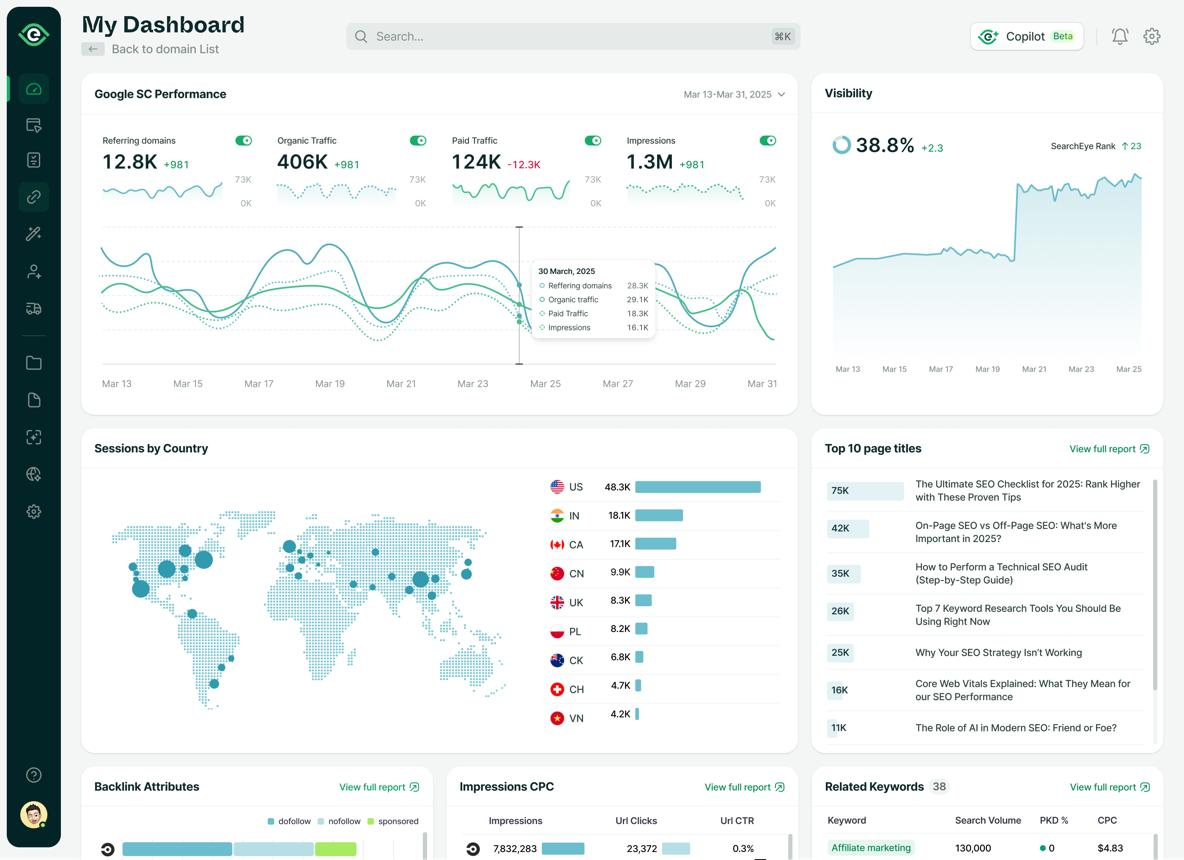
This is where an SEO dashboard becomes useful. A well-designed dashboard brings important SEO data into one place, making it easier to monitor website performance and make informed decisions. The right SEO Dashboard Features can help you track rankings, organic traffic, technical health, backlinks, and other important performance indicators.
In this guide, we will explore the most important features to look for when using an SEO dashboard to track your website’s SEO progress.
What Is an SEO Dashboard?
An SEO dashboard is a centralized platform or reporting interface that displays important search engine optimization data in an easy-to-understand format. Instead of checking multiple reports separately, marketers and website owners can use a dashboard to review key metrics in one location.
A dashboard can provide information about keyword rankings, website traffic, backlinks, technical issues, conversions, and other SEO metrics. By regularly reviewing this information, you can identify trends and understand how your optimization efforts are affecting website performance.
Why Is an SEO Dashboard Important?
SEO performance can change frequently because of search engine algorithm updates, competitor activity, technical changes, and changes in search behavior. Monitoring performance regularly helps you react to these changes more effectively.
An SEO dashboard can help you:
- Monitor important SEO metrics in one place
- Identify changes in organic traffic
- Track keyword ranking progress
- Discover technical SEO problems
- Analyze backlink growth and quality
- Measure the effectiveness of SEO campaigns
- Find opportunities for improvement
- Create clear SEO performance reports
The goal is not simply to collect data. The real value comes from turning that data into useful insights and actionable decisions.
Top SEO Dashboard Features to Track SEO Progress
Choosing the right dashboard depends on your goals, but several features are useful for almost every website.
1. Keyword Ranking Tracking
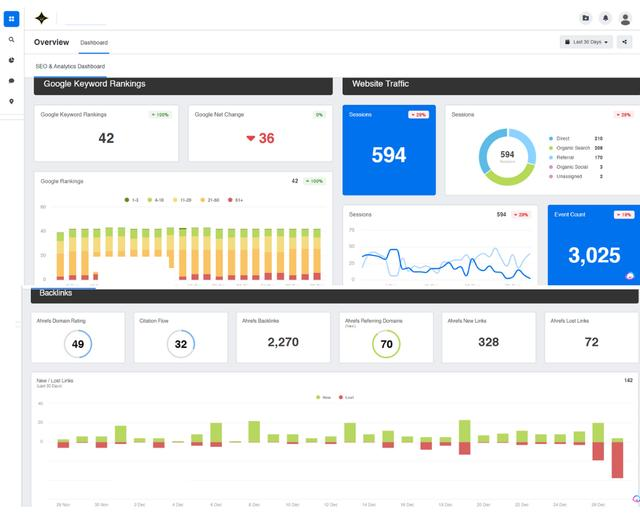
Keyword rankings are one of the most important metrics in SEO. A dashboard should allow you to monitor how your target keywords perform in search results over time.
Ranking data can help you determine whether your optimization efforts are working. You can identify keywords that are improving, declining, or remaining unchanged.
A useful keyword tracking section should ideally provide:
- Current keyword positions
- Ranking changes over time
- Keyword groups or categories
- Search visibility trends
- Ranking distribution
Tracking rankings regularly also helps you identify pages that may require additional content optimization.
2. Organic Traffic Monitoring
Organic traffic shows how many visitors reach your website through unpaid search results. Monitoring this metric helps you understand whether your website is attracting more search users over time.
Look beyond total traffic. Analyze traffic by landing page, keyword, device, location, and time period when possible.
For example, a sudden decline in organic traffic may indicate a ranking drop, technical issue, content problem, or change in search demand. Identifying the cause quickly allows you to take corrective action.
3. Search Visibility Analysis
Search visibility provides an overall view of how prominently your website appears for its target keywords.
This metric can be particularly useful when individual keyword rankings fluctuate. Instead of focusing on one keyword, you can examine broader visibility trends across a group of important search terms.
A steady increase in visibility can indicate that your website is gaining stronger organic presence.
4. Backlink Monitoring
Backlinks remain an important part of SEO because links from other websites can contribute to a website’s authority and discoverability.
A dashboard should make it easy to monitor your backlink profile and understand how it changes over time.
Important backlink information may include:
- Number of referring domains
- New backlinks
- Lost backlinks
- Linking pages
- Anchor text
- Link trends
Monitoring backlinks can help you identify valuable links as well as unexpected losses that may require investigation.
5. Technical SEO Monitoring
Technical problems can prevent search engines from properly crawling, indexing, and understanding your website. Therefore, technical SEO data should be an important part of your reporting process.
Useful technical SEO Dashboard Features can help highlight issues such as:
- Broken links
- Crawl problems
- Indexing issues
- Duplicate pages
- Missing metadata
- Slow-loading pages
- Mobile usability problems
- Redirect errors
Regular technical monitoring allows you to identify problems before they have a significant impact on organic performance.
Content Performance Tracking
Content plays a major role in attracting organic visitors. A good dashboard should help you understand which pages are performing well and which ones may need improvement.
You can compare pages based on organic traffic, keyword rankings, impressions, clicks, and conversions. This information can reveal which topics are generating interest and where content updates may provide additional value.
Identify Underperforming Pages
Pages with declining traffic or rankings deserve closer attention. Check whether the content is outdated, whether search intent has changed, or whether competing pages provide more comprehensive information.
Updating relevant content can help maintain its usefulness and search visibility.
Click-Through Rate Monitoring
Ranking well does not always guarantee a high number of visitors. Click-through rate (CTR) measures how frequently users click your search result after seeing it.
A dashboard can help you identify pages with high impressions but relatively low clicks.
These pages may benefit from improvements to their:
- Page titles
- Meta descriptions
- Search intent alignment
- Content relevance
- Structured information
Improving CTR can increase organic visits without necessarily requiring higher rankings.
Conversion and Goal Tracking
SEO should ultimately contribute to meaningful business or website goals. Therefore, traffic and rankings should not be the only metrics you monitor.
Conversion tracking can help connect SEO activity with outcomes such as:
- Form submissions
- Product purchases
- Account registrations
- Newsletter sign-ups
- Downloads
- Contact requests
When you connect SEO metrics with conversions, you gain a better understanding of which pages and keywords are contributing to valuable results.
Competitor and Market Comparison
Understanding your own performance is useful, but comparing it with competitors can provide additional context.
Competitor analysis can help you discover keywords where competing websites have stronger visibility. It may also reveal content topics, backlink opportunities, and areas where your website has room to improve.
However, competitor data should be used as a reference rather than a reason to copy another website. Your strategy should remain focused on providing useful content and a better experience for your target audience.
Custom SEO Reports
Reporting is another important part of SEO management. A dashboard should make it easy to organize relevant metrics and create reports based on specific goals.
Different stakeholders may need different information. For example, a website owner may want to see traffic and conversions, while an SEO specialist may need detailed keyword, technical, and backlink information.
Custom reports make it easier to focus on the metrics that matter most.
How to Use SEO Dashboard Data Effectively
Having access to data is only the first step. To get meaningful results, review your metrics consistently and look for patterns rather than focusing on isolated changes.
Start by establishing a baseline for your website. Then monitor important metrics regularly and compare current performance with previous periods.
When you notice a significant change, investigate the possible cause before making major changes. For example, a traffic decline should be examined alongside rankings, indexing status, technical health, and search demand.
The best SEO Dashboard Features are those that help transform complex data into clear insights and practical actions.
See also: Leaflet Distribution Is Helping Local Businesses Cut through Digital Marketing Fatigue
Final Thoughts
Tracking SEO progress requires more than checking keyword positions occasionally. You need a broader view of organic traffic, search visibility, content performance, backlinks, technical health, CTR, and conversions.
The right dashboard can bring these metrics together and make SEO performance easier to understand. By regularly reviewing the most important data, you can identify problems earlier, recognize opportunities, and make more informed optimization decisions.
Whether you manage a small website or a large content platform, using the right SEO Dashboard Features can make your SEO monitoring process more organized, measurable, and effective.