ByJohn A
What Determines Direct Mail Services Cost? A Cost Breakdown for Different Campaigns
Direct mail campaign costs depend on several moving parts, including the format, quantity, paper and print specifications, personalization, postage, addressing, and fulfillment requirements. The level of production and mailing support also changes the final spend. Understanding these factors helps businesses compare quotes accurately and build campaigns around their actual goals. For brands such as iti Direct Mail, a clear view of campaign requirements makes it easier to match production and mailing services to the job.
The Main Factors Behind Direct Mail Costs
There is no single rate that applies to every direct mail campaign. A simple postcard sent to a defined mailing list has very different production requirements from a personalized multi-piece package. The specifications selected at the planning stage can affect several parts of the campaign simultaneously.
The first consideration is the mail piece itself. Postcards, letters, brochures, catalogs, self-mailers, and dimensional packages require different materials and production processes. Size, paper stock, page count, folding, coating, and finishing all influence how the piece is produced and prepared for mailing.
Quantity also affects the economics of a campaign. Larger mailing quantities can make production more efficient because setup and preparation work can be distributed across more pieces. Smaller campaigns may involve similar preparation steps but across fewer pieces, making each mailed item represent a larger share of the production work.
Postage is another major component. Mail class, physical dimensions, weight, destination, and preparation methods can affect mailing charges. A campaign should therefore be planned around both creative requirements and postal specifications rather than treating postage as an afterthought.
How the Mail Format Changes the Budget
The physical format of a campaign has a direct relationship with production requirements. A postcard generally involves fewer production steps than a folded mailer containing several inserts. A letter package may require printing, folding, inserting, envelope preparation, addressing, sealing, sorting, and mailing.
Design complexity matters as well. A basic single-piece design may require less production preparation than a campaign containing multiple versions, personalized text, variable images, or different offers for separate audience segments.
Some common formats include:
- Postcards: A practical choice for announcements, promotions, property marketing, reminders, and calls to action.
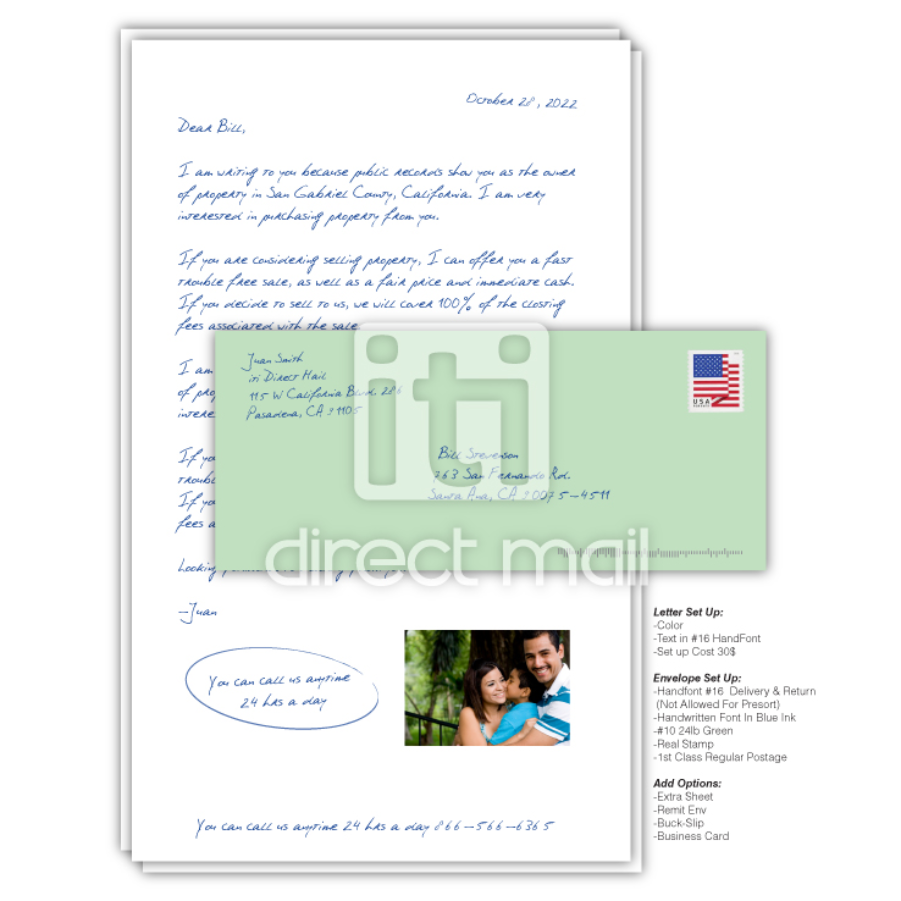
- Letters and envelopes: Useful when the message needs more space, personalization, or supporting information.
- Brochures and self-mailers: Suitable for presenting several services, products, locations, or offers within one physical piece.
Material choices can also influence the production process. Heavier stocks, specialty finishes, unusual sizes, and custom folds may require additional handling. A design that looks simple on screen can therefore involve more production work once it moves into printing and mailing.
Why Personalization Can Change Campaign Requirements
Personalization can make a mail campaign more relevant, but it introduces additional production considerations. A campaign may use personalized names, addresses, promotional offers, QR codes, images, or messages based on recipient data.
Variable data printing allows different information to appear on individual pieces while using the same overall campaign design. This requires accurate customer data, proper file preparation, data handling, and quality checks.
Audience segmentation can add another layer. For example, a business may send different offers to existing customers, prospects, and inactive customers. Each segment may need a different version of the creative, mailing list, or package.
The more versions a campaign contains, the more carefully production needs to be managed. Data accuracy also matters because an error in a personalized field can affect the recipient’s experience and create unnecessary reprints.
Printing and Mailing Are Only Part of the Process
The phrase direct mail printing and mailing covers two visible stages, but a successful campaign often involves several additional tasks. Files may need to be prepared for production, mailing data checked, addresses processed, pieces matched with recipients, and finished materials sorted for delivery.
Businesses can manage these activities independently, but coordinating several vendors can create extra administrative work. Direct mail fulfillment services can bring printing, personalization, assembly, addressing, and mailing preparation into a coordinated workflow.
Fulfillment becomes particularly relevant for campaigns containing multiple components. A package might include a letter, brochure, response card, promotional insert, and envelope. Each item has to be matched correctly before the final package enters the mail stream.
The complexity of fulfillment therefore depends less on the appearance of the finished package and more on how many individual production and handling steps are required.
Mailing List Quality Can Affect Campaign Efficiency
A well-produced mail piece cannot compensate for an inaccurate or poorly targeted mailing list. Address quality affects how efficiently a campaign reaches its intended audience and can influence preparation requirements before mailing.
List work may include address verification, formatting, deduplication, segmentation, and suppression of records that should not receive the campaign. Businesses using their own customer database may need additional data preparation before it can be used for mailing.
Audience selection also affects the size and structure of the campaign. A tightly defined list may support a focused message, while a broader campaign may require multiple geographic or customer segments.
Good list management is therefore part of campaign planning rather than a separate administrative task.
Campaign Size and Production Volume Matter
Campaign volume can affect how production resources are allocated. Larger runs may allow setup, printing, and handling processes to be distributed across more pieces. Smaller campaigns can still be effective, particularly when the audience is highly targeted, but production requirements should be assessed before comparing quotes.
Quantity should also be considered alongside response goals. Sending more pieces does not automatically produce better results. A smaller, carefully selected audience with relevant messaging may be more useful than a larger list with weak targeting.
This makes the number of pieces only one part of the budgeting decision. The purpose of the campaign, audience quality, format, and expected action all deserve attention.
Different Campaigns Have Different Cost Drivers
A promotional postcard campaign is usually structured differently from a detailed catalog or personalized customer retention campaign. Each format creates a different combination of production and handling requirements.
For a postcard campaign, the main considerations are generally the card size, paper, printing, quantity, addressing, and postage. A letter campaign adds folding, envelope preparation, insertion, and sealing. A multi-piece package introduces additional assembly and matching requirements.
Catalog-style campaigns can involve more pages, binding or folding, heavier materials, and greater handling requirements. Personalized campaigns may require variable data processing and additional quality control.
For businesses comparing the best direct mail services pricing, the useful question is not simply which provider offers the lowest quote. The better comparison is based on what each quote includes and how closely the service matches the campaign’s production requirements.
How to Compare Quotes Without Missing Hidden Work
A quote becomes easier to evaluate when every stage of the campaign is clearly defined. Two providers can appear to offer similar services while including different production tasks in their pricing.
Check whether the quoted service covers design preparation, printing, personalization, list processing, addressing, assembly, postage, mailing preparation, and other requested handling. Ask for clarification on any item that is not clearly identified.
It is also useful to provide the same campaign specifications to each provider. Give them the intended format, quantity, paper requirements, number of versions, personalization needs, mailing list details, and fulfillment requirements. Consistent specifications make comparisons more meaningful.
A detailed quote can also reveal opportunities to simplify the campaign. Changing the format, reducing unnecessary inserts, or limiting the number of versions may reduce production complexity without weakening the message.
Planning a Campaign Around Its Actual Requirements
Good budgeting starts before the artwork reaches the printer. Define the audience, campaign objective, format, message, personalization requirements, and desired response before requesting production estimates.
For example, a business promoting a single offer may need only one mail piece and one audience segment. Another campaign may require several creative versions, personalized information, and multi-piece assembly. Treating both campaigns as the same type of mailing can lead to inaccurate expectations.
iti Direct Mail can be considered as part of this planning process when businesses need production and mailing requirements assessed together. Clear specifications give a provider the information needed to build a more accurate campaign estimate.
Build the Budget Around the Full Campaign
Direct mail costs are shaped by the complete journey from a digital design file to a prepared mail piece. Printing has only one component. Materials, format, personalization, list preparation, assembly, addressing, postage, and fulfillment can all influence the final figure.
The most useful budget is therefore based on the actual campaign rather than a generic per-piece assumption. Businesses should define what they want mailed, who should receive it, how personalized it needs to be, and what production support is required before comparing providers.
A clear campaign brief also makes it easier to identify unnecessary production steps and prioritize the elements that matter to the recipient. If you are preparing a campaign, request a quote using complete specifications rather than asking for a general rate. That gives providers enough context to assess the work involved and gives you a more useful basis for comparing services.
Direct mail works best when creative decisions, audience selection, production, and mailing logistics are planned as one connected process. Understanding those cost drivers helps businesses make informed choices without sacrificing the quality or purpose of the campaign.