ByJohn A
50 kVA Pad Mounted Transformer: A Practical Guide to Selection and Installation
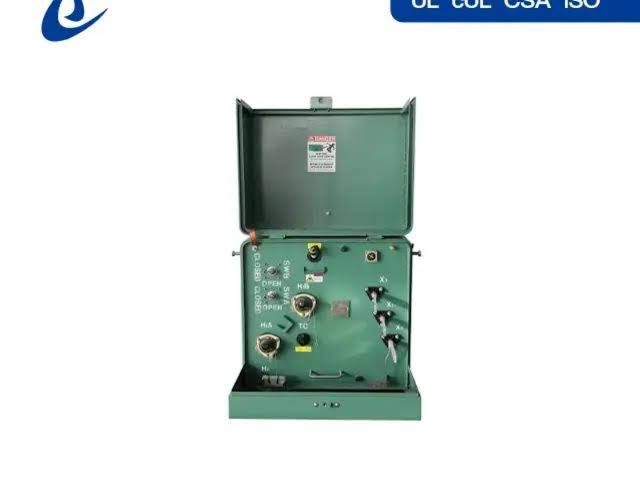
A 50 kVA pad mounted transformer is a compact ground-level transformer used to reduce distribution voltage for residential, commercial, agricultural, and light industrial electrical systems. Installed on a concrete foundation, it can connect underground utility lines to lower-voltage equipment without requiring an overhead pole-mounted installation. Selecting the correct unit requires attention to voltage, load capacity, installation conditions, protection, and utility requirements.
What Is a 50 kVA Pad Mounted Transformer?
A pad mounted transformer is designed for installation at ground level, typically on a reinforced concrete pad. The enclosure protects the transformer components and provides controlled access to the primary and secondary connections.
The 50 kVA rating indicates the transformer’s apparent power capacity. It does not, by itself, specify the primary or secondary voltage. Those values must be confirmed from the transformer’s nameplate and project specifications.
These transformers are commonly found in underground electrical distribution systems where equipment needs to be positioned close to the buildings or loads being served.
Where Are 50 kVA Transformers Used?
A 50 kVA pad mounted transformer can be suitable for relatively modest electrical loads. Applications may include:
- Residential properties
- Small commercial buildings
- Farms and agricultural facilities
- Workshops
- Small offices
- Retail properties
- Lighting systems
- Small pumping installations
- Remote buildings
The appropriate rating depends on the calculated electrical demand rather than the building type alone.
Understanding the 50 kVA Rating
Transformer capacity is measured in kilovolt-amperes, or kVA. For a single-phase transformer, apparent power can be calculated using:
kVA = Voltage × Current ÷ 1,000
For a three-phase transformer, the calculation is:
kVA = √3 × Voltage × Current ÷ 1,000
The transformer’s available current therefore depends on the secondary voltage. A 50 kVA unit supplying a lower secondary voltage will deliver a higher current than the same transformer operating at a higher voltage.
The electrical designer should calculate the expected load before selecting the transformer.
Single-Phase or Three-Phase?
A 50 kVA pad mounted transformer can be configured for single-phase or three-phase applications, depending on the manufacturer’s product range and project requirements.
Single-phase units are often used for residential and smaller distribution loads.
Three-phase equipment may be more suitable for facilities with three-phase motors, industrial machinery, HVAC equipment, and other three-phase loads.
The phase configuration must match the electrical system. A transformer cannot simply be selected based on its kVA rating without confirming this requirement.
Primary and Secondary Voltage
Voltage configuration is one of the most important specifications.
The primary voltage must match the incoming utility or distribution supply. The secondary voltage needs to match the downstream electrical system.
A 50 kVA pad mounted transformer may be available with different primary and secondary voltage combinations, depending on the manufacturer and utility standards.
Tap settings may also be included to compensate for variations in supply voltage. Tap adjustments should follow the manufacturer’s instructions and applicable electrical procedures.
Oil-Filled Construction
Many pad-mounted distribution transformers use insulating liquid for cooling and electrical insulation.
Oil-filled construction allows heat produced inside the transformer to transfer through the insulating fluid to the tank and cooling surfaces. The enclosure protects the internal components from normal outdoor exposure.
Because liquid-filled transformers have specific environmental and safety considerations, installation requirements should be reviewed carefully.
The applicable utility specifications may also establish requirements for containment, clearances, grounding, and access.
See also: Closing the Doors Properly: What a Business Dissolution Lawyer Actually Handles
Concrete Pad Requirements
The foundation must support the transformer securely and maintain the correct position for underground cable connections.
A 50 kVA pad mounted transformer should be installed on a pad designed according to the manufacturer’s dimensions and utility requirements.
The pad design may specify:
- Concrete dimensions
- Thickness
- Reinforcement
- Conduit openings
- Cable entry locations
- Surface level
- Equipment clearances
The foundation should be constructed on properly prepared and compacted ground to reduce the possibility of settlement.
Underground Cable Connections
Pad-mounted transformers are commonly connected to underground primary and secondary cables.
Conduit positions need to align with the transformer’s cable compartments. Incorrect conduit placement can make cable installation difficult and may require modifications to the foundation.
Before concrete is poured, contractors should verify the transformer manufacturer’s dimensional drawing and approved utility construction details.
Cable bend radius and pulling requirements should also be considered during conduit planning.
Electrical Protection
A transformer requires appropriate protection against electrical faults and abnormal operating conditions.
Depending on the installation, protective equipment can include primary fuses, secondary breakers, surge arresters, and other devices.
The protection system should be coordinated with the transformer and downstream electrical equipment. Short-circuit calculations may be required to establish appropriate equipment ratings.
Only qualified electrical professionals should design and install these systems.
Grounding Requirements
Grounding is an essential part of a pad-mounted transformer installation.
The transformer enclosure and associated electrical equipment need to be grounded according to the approved electrical design and applicable codes.
Grounding may involve grounding electrodes, conductors, bonding connections, and other components.
The specific arrangement depends on the electrical system, transformer configuration, utility requirements, and local standards.
Site Location and Clearances
The location of a 50 kVA pad mounted transformer should be determined before construction begins.
The transformer needs adequate space for installation, operation, inspection, and maintenance. Required clearances from buildings, doors, windows, fences, roads, landscaping, and other structures must be observed.
The area should also remain accessible to authorized utility and maintenance personnel.
The exact clearance requirements vary according to voltage, equipment design, local codes, and utility standards.
Load Planning and Future Expansion
Transformer selection should consider both current and anticipated electrical demand.
A property may initially require 40 kVA but later add HVAC equipment, pumps, machinery, electric vehicle charging, or additional buildings.
A load forecast can help determine whether a 50 kVA transformer provides sufficient capacity for expected growth.
Oversizing should also be avoided when unnecessary because larger equipment can increase project costs.
Efficiency and Operating Costs
Transformer efficiency affects operating expenses over the equipment’s service life.
Transformers experience no-load losses while energized and load losses when supplying current. The amount of energy lost depends on transformer design and operating conditions.
For installations where the transformer remains energized continuously, efficiency can be a useful consideration when comparing different models.
Purchase price should therefore be evaluated alongside efficiency, expected loading, maintenance requirements, and service life.
Maintenance and Inspection
Routine inspection can help identify problems before they result in equipment failure.
Maintenance personnel may check:
- Transformer enclosure
- Bushings
- Cable connections
- Grounding system
- Surge protection
- Signs of overheating
- Physical damage
- Corrosion
- Oil leakage
- Surrounding vegetation
Maintenance procedures should follow the manufacturer’s recommendations and utility requirements.
The transformer should only be opened or serviced by appropriately trained and authorized personnel.
Choosing the Right Supplier
A transformer supplier should provide detailed technical documentation covering the equipment’s electrical and physical characteristics.
Before ordering a 50 kVA pad mounted transformer, confirm:
- kVA rating
- Primary voltage
- Secondary voltage
- Phase configuration
- Frequency
- Impedance
- Cooling method
- Insulation system
- Tap arrangement
- Enclosure specifications
- Dimensions and weight
- Applicable standards
For utility-connected projects, the equipment should also be approved or accepted by the relevant utility where required.
Final Considerations
A 50 kVA pad mounted transformer can provide an effective ground-level solution for smaller electrical distribution systems. Its compact arrangement makes it particularly useful where underground power distribution is preferred.
Correct selection requires more than choosing a 50 kVA rating. Primary and secondary voltage, phase configuration, load requirements, foundation dimensions, cable routing, grounding, protection, clearances, and future demand should all be evaluated before installation.
The transformer pad and electrical connections should be designed according to the specific equipment documentation, utility requirements, applicable electrical codes, and site conditions. Installation, testing, and commissioning should be carried out by qualified electrical professionals.