ByJohn A
Water Damage Repair Services: What Homeowners Should Know Before Restoration Begins
Water damage can affect far more than the visible area where water has collected. A leaking pipe, overflowing appliance, roof leak, or flooding event can leave moisture behind walls, under flooring, and inside insulation. Those hidden areas may continue causing problems even after the surface appears dry.
Professional water damage repair services are designed to address the damage, remove remaining moisture, and restore affected parts of a property. Understanding the process can help property owners recognize what needs attention and what to expect from a professional restoration team.
Where Water Damage Commonly Starts
Water damage can come from several sources, and the source often determines how quickly the problem needs to be addressed. Plumbing leaks are among the most common causes, particularly around bathrooms, kitchens, laundry areas, and water heaters.
Other sources include:
- Burst or damaged supply pipes
- Appliance leaks
- Roof and gutter problems
- Basement flooding
- Toilet or drain overflows
- Storm-related water intrusion
- Foundation leaks
A small leak can create extensive damage if moisture remains trapped for an extended period. Water can move through drywall, flooring, wooden framing, and other porous materials.
Why Quick Assessment Matters
The first step in water damage repair services is usually an inspection of the affected property. A professional assessment helps identify where the water originated, how far it has traveled, and which materials have been affected.
Visible moisture is only part of the picture. Technicians may inspect flooring, walls, ceilings, cabinets, insulation, and other areas that can retain water.
The type of water involved also matters. Clean water from a supply line presents different concerns than water from a sewage backup or contaminated flood source. Identifying the source helps determine the appropriate cleaning, removal, and drying procedures.
What Happens During Water Damage Restoration
Restoration generally involves several stages rather than a single repair. The exact work depends on the size and type of the loss.
1. Inspection and Moisture Detection
Technicians assess the affected rooms and identify areas with elevated moisture. Moisture meters and other equipment can help locate water that is not obvious from a visual inspection.
2. Water Removal
Standing water is removed using pumps, extraction equipment, and other appropriate tools. Removing water promptly can reduce the amount absorbed by floors, walls, furniture, and other materials.
3. Drying and Dehumidification
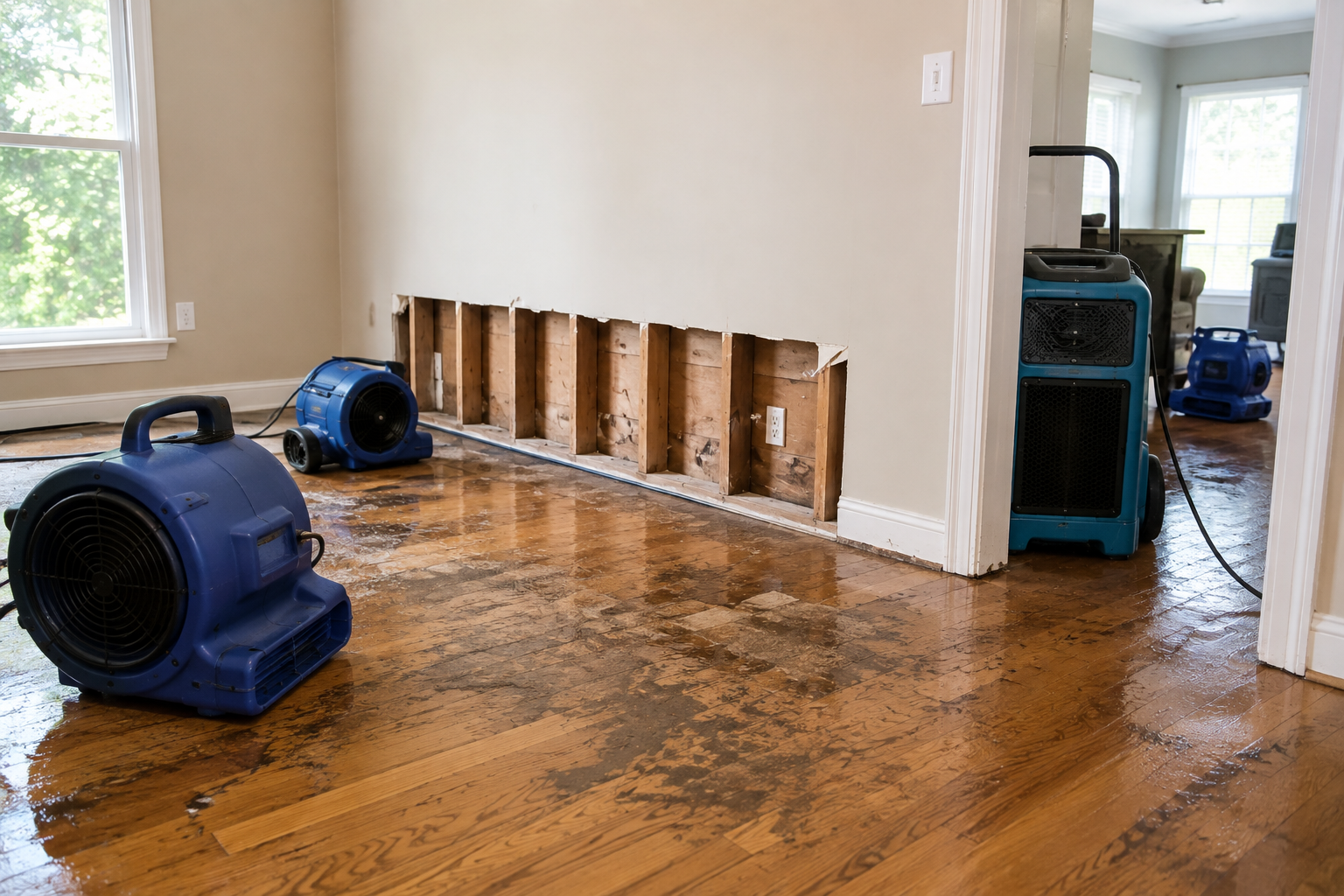
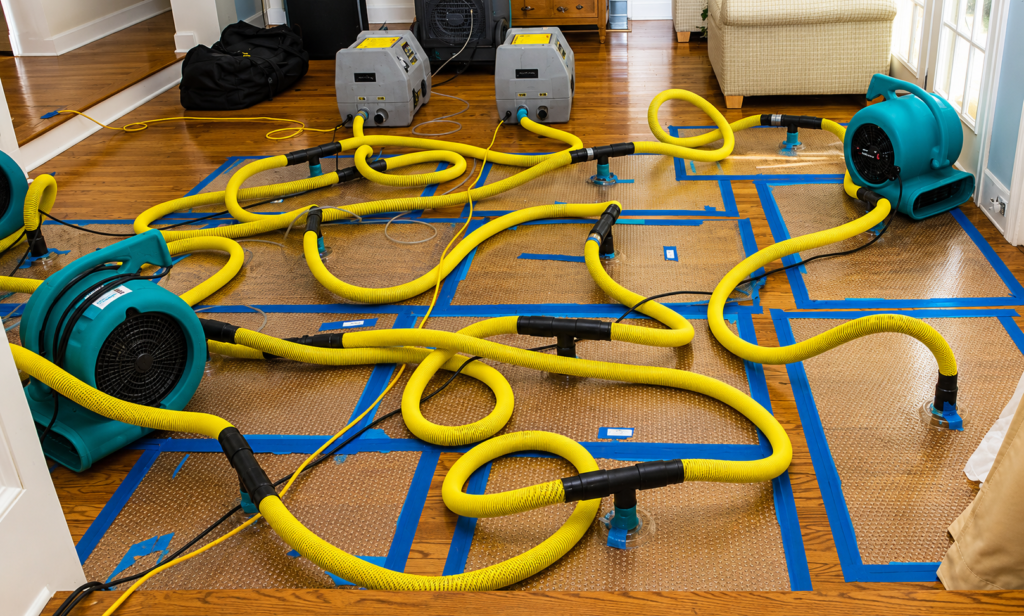
After visible water has been removed, affected materials still need time and airflow to dry. Air movers and dehumidifiers are commonly used to reduce moisture levels.
Drying should continue until moisture readings show that affected areas have reached suitable levels. Simply running a household fan for a short period may not be enough for water trapped inside building materials.
4. Cleaning and Sanitizing
Some water damage requires cleaning and treatment of affected surfaces. The process depends on the water source and the materials involved.
Items that can be safely restored may be cleaned and dried, while heavily damaged materials may need removal.
5. Repairs and Replacement
The final stage addresses damaged building components. This may include replacing sections of drywall, flooring, trim, insulation, cabinets, or other materials.
Finding Water Damage Restoration Companies Near Me
Searching for water damage restoration companies near me can produce many local options, but location alone should not determine the choice. Property owners should check whether a company has experience with the type of damage involved and whether its technicians can handle both water extraction and structural drying.
Look for clear information about:
- Inspection procedures
- Water extraction equipment
- Moisture monitoring
- Drying methods
- Cleaning services
- Repair capabilities
- Emergency response availability
- Documentation of the restoration work
A company that explains its process clearly can make it easier to understand what work is required before repairs begin.
When to Search for a Water Damage Restoration Service Near Me
A water damage restoration service near me may be needed when water has affected areas that cannot be adequately dried through normal household methods.
Professional assistance is particularly useful when:
- Water has spread across multiple rooms.
- Walls or ceilings feel damp.
- Flooring has started to buckle or swell.
- Water has entered beneath cabinets.
- A large leak has continued for several hours.
- Floodwater has entered the property.
- There is a sewage or contaminated-water concern.
- Moisture remains after an attempted cleanup.
The longer moisture remains inside porous materials, the greater the chance of secondary damage.
Understanding Restoration Water Damage Services
The phrase restoration water damage services covers a range of work, from emergency water extraction to drying and repairs. Not every property requires every stage.
For example, a small clean-water leak that is discovered quickly may involve limited extraction and drying. A major flood can require extensive removal of damaged materials, structural drying, cleaning, and reconstruction.
A proper assessment helps separate materials that can be dried and restored from those that have suffered permanent damage.
Choosing a Water Damage Restoration Company
Selecting a water damage restoration company requires more than comparing advertised prices. Ask what services are included in the estimate and whether additional repairs may be necessary after drying.
It is also useful to ask how moisture will be measured. A professional restoration process should not rely only on whether a wall or floor feels dry to the touch.
Property owners should also request documentation where appropriate. Photographs, moisture readings, affected-area records, and details of completed work can provide a useful record for property management and insurance purposes.
Questions to Ask Before Work Begins
Before authorizing restoration work, property owners can ask:
- What caused the water damage?
- How far has the moisture traveled?
- Which materials can be restored?
- Which materials need to be removed?
- How will moisture levels be measured?
- How long is the drying process expected to take?
- What cleaning or sanitizing will be required?
- Are repairs or reconstruction included?
- Will the work be documented?
- What additional costs could arise?
Clear answers can help prevent misunderstandings once work is underway.
Preventing Future Water Damage
Restoration addresses existing problems, but prevention can reduce the chance of another incident. Regularly inspect plumbing connections, water heaters, washing machine hoses, roofs, gutters, and areas around windows and doors.
A water leak detection device can also provide an early warning when unexpected moisture is detected. Keeping shutoff valves accessible makes it easier to stop water quickly during a plumbing emergency.
Property owners should also address minor leaks instead of allowing them to continue. Staining, musty odors, peeling paint, swollen flooring, or recurring damp spots can indicate a moisture problem that deserves inspection.
See also: Leaflet Distribution Is Helping Local Businesses Cut through Digital Marketing Fatigue
Making a Practical Restoration Decision
Water damage should be assessed based on its source, spread, duration, and effect on building materials. Surface drying alone does not confirm that a property is fully dry.
Professional water damage repair services can include inspection, extraction, drying, cleaning, and repairs depending on the condition of the property. Knowing what each stage involves allows homeowners and property managers to ask better questions, compare local providers, and make informed decisions about the work required.