ByJohn A
What to Know About Power Plant Maintenance, Engineering, Testing, Design, and Repair
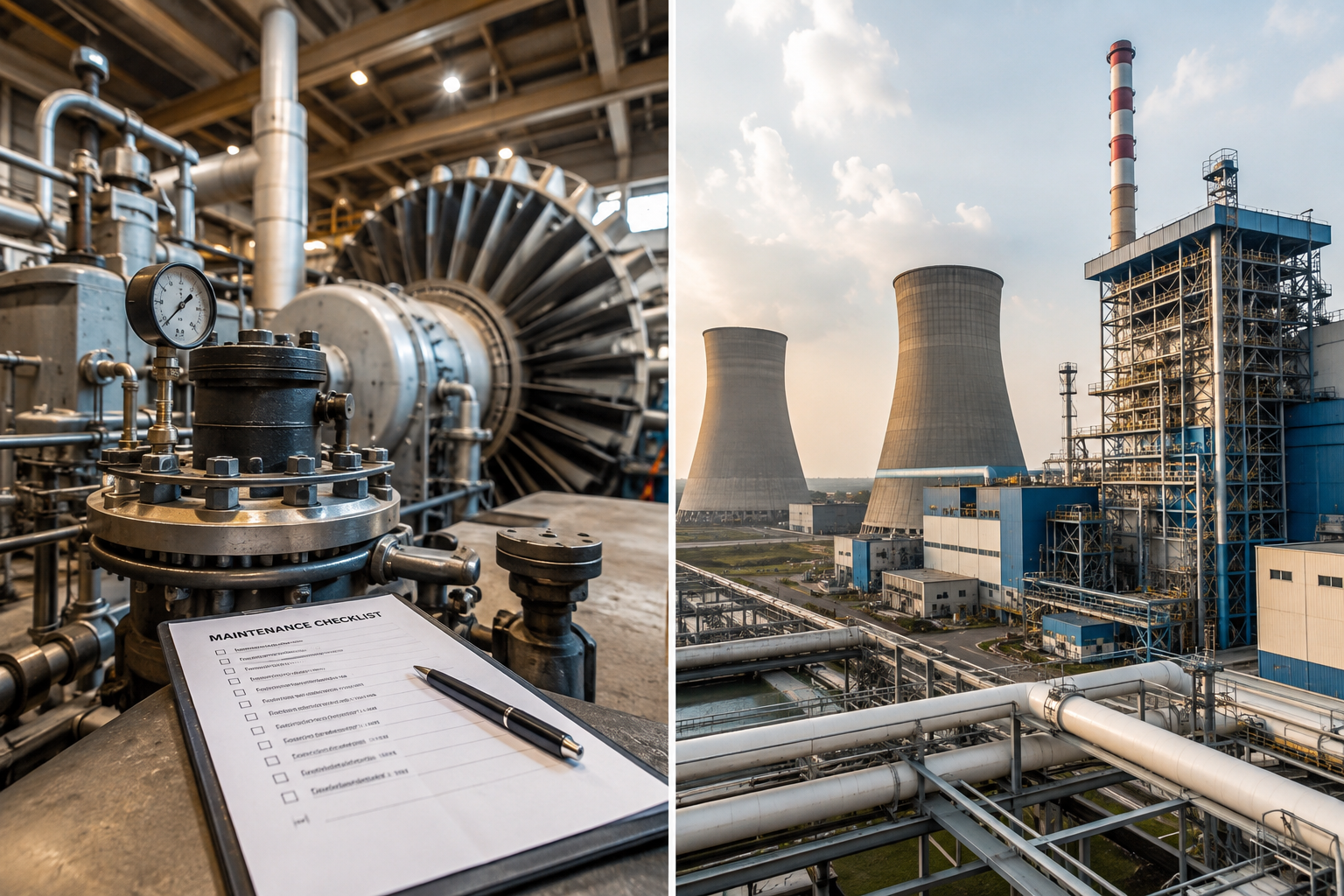
Power plants depend on equipment that must operate safely, efficiently, and consistently under demanding conditions. Turbines, generators, boilers, pumps, transformers, cooling systems, control equipment, and auxiliary systems all require regular inspection and care. A small equipment issue can reduce output, increase fuel consumption, or lead to an unexpected shutdown.
For plant owners and operators, maintenance is therefore more than fixing equipment after it fails. It involves scheduled inspections, condition monitoring, equipment testing, component replacement, troubleshooting, and corrective work. Understanding how these activities fit together can help plant teams plan maintenance work and reduce avoidable operating problems.
What power plant maintenance covers
Power plant maintenance services generally include activities designed to keep generating equipment and supporting systems in suitable operating condition. The exact scope depends on the plant type, equipment configuration, operating hours, age, and maintenance strategy.
Routine maintenance may include lubrication, cleaning, tightening connections, checking alignment, inspecting electrical components, replacing worn parts, and testing safety systems. More detailed inspections can involve vibration analysis, thermal imaging, oil analysis, electrical testing, and examination of critical mechanical components.
Maintenance can be divided into several broad categories:
- Preventive maintenance: Scheduled work carried out at predetermined intervals.
- Predictive maintenance: Work planned around equipment condition and monitoring data.
- Corrective maintenance: Repairs performed after a defect or abnormal condition is identified.
- Emergency maintenance: Immediate intervention following equipment failure or a serious operational issue.
- Overhaul maintenance: Detailed inspection and refurbishment of major equipment during planned shutdowns.
A well-organized maintenance program uses several of these methods rather than relying on one approach.
Why maintenance planning matters
Maintenance schedules should reflect the actual condition and operating requirements of each piece of equipment. Treating every component in the same way can result in unnecessary work on some assets while leaving other risks insufficiently addressed.
Critical equipment deserves particular attention because its failure can affect generation capacity or plant safety. For example, a turbine bearing problem may require immediate action, while a minor issue with a non-critical auxiliary component may be addressed during the next scheduled outage.
Maintenance planning also needs to account for spare parts, specialist technicians, tools, shutdown duration, safety procedures, and equipment access. Poor planning can extend outages even when the technical repair itself is relatively straightforward.
Historical maintenance records are useful for identifying recurring failures. If the same pump, valve, motor, or electrical component repeatedly develops problems, the plant team can investigate the underlying cause instead of continuing to replace the same part.
The connection between engineering and maintenance
Maintenance decisions often depend on engineering information. Equipment specifications, drawings, operating limits, load conditions, and previous inspection results help technicians determine what work is appropriate.
Power plant engineering services may cover mechanical, electrical, civil, instrumentation, control, and other technical disciplines associated with plant equipment and infrastructure. Engineering teams can support equipment assessments, modifications, troubleshooting, upgrades, and technical documentation.
Engineering analysis is particularly useful when an asset has been modified, operates outside its original conditions, or has experienced repeated failures. A repair may solve the immediate problem, but an engineering review can determine whether the failure resulted from vibration, thermal stress, incorrect alignment, poor operating conditions, material degradation, or another underlying cause.
How performance testing supports maintenance decisions
Maintenance should not be judged only by whether equipment starts and runs. Performance measurements can reveal changes that may not be visible during routine inspections.
Power plant performance testing companies evaluate plant or equipment performance using defined testing procedures and operating conditions. Depending on the facility, testing may examine output, heat rate, efficiency, auxiliary power consumption, emissions-related parameters, or other performance indicators.
Comparing current test results with previous measurements can help identify deterioration. A gradual decline in efficiency, for example, may point toward fouling, component wear, control problems, or other issues that require investigation.
Performance testing can also be useful after major maintenance. Testing before and after an overhaul provides a way to assess whether the work restored expected operating performance.
Design considerations for maintenance
Maintenance requirements begin before a plant starts operating. Equipment selection, layout, accessibility, component specifications, and system configuration can all influence future maintenance work.
Power plant design companies may work on plant layouts, equipment arrangements, piping systems, electrical systems, instrumentation, structural elements, and other engineering requirements. Good design should allow technicians to inspect, remove, service, and replace equipment without unnecessary difficulty.
Access is a practical concern. Components that require frequent inspection should not be positioned where routine servicing requires extensive dismantling. Adequate space around equipment can also improve worker safety and reduce outage time.
Design documentation should remain available throughout the plant’s operating life. Accurate drawings, equipment manuals, specifications, and modification records make future maintenance planning considerably easier.
What happens during power plant repair
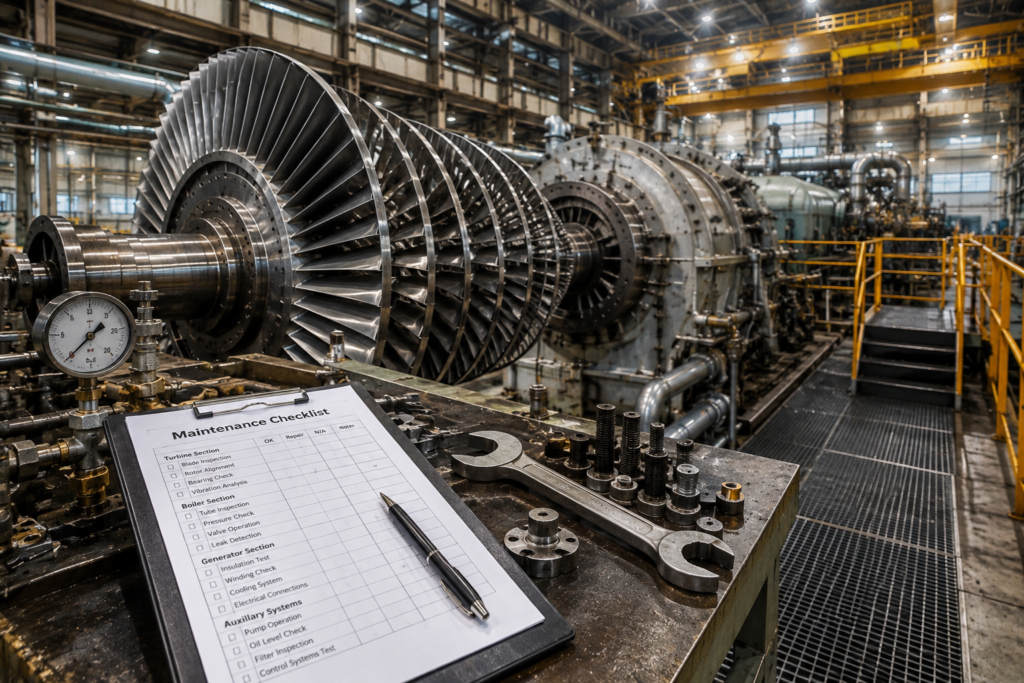
Power plant repair can range from replacing a damaged component to restoring a major mechanical or electrical system after a failure. The first step is usually fault identification. Technicians and engineers examine symptoms, operating records, inspection results, and affected equipment to determine the likely cause.
Repairs may involve replacing bearings, seals, valves, pumps, motors, electrical components, piping sections, instrumentation, or other parts. Larger repairs can require dismantling major equipment, machining components, correcting alignment, conducting non-destructive testing, and completing post-repair inspections.
Safety procedures must remain central throughout the work. Isolation, lockout and tagout, confined-space controls, lifting procedures, electrical safety, and equipment-specific precautions may all be required depending on the task.
After repair work is completed, equipment should be inspected and tested before returning to normal operation. Functional checks can confirm that the repaired system responds correctly, while performance measurements may provide additional evidence that the equipment is operating as expected.
See also: Leaflet Distribution Is Helping Local Businesses Cut through Digital Marketing Fatigue
Building a practical maintenance program
An effective maintenance program starts with an asset register that identifies major equipment and its operational importance. Each asset can then be assigned inspection intervals, maintenance tasks, condition-monitoring requirements, and documentation procedures.
Plant teams should also track failure history, repair costs, downtime, spare-part consumption, and inspection findings. These records can reveal which assets create the greatest operational risk and where maintenance resources should be concentrated.
Regular reviews are useful because plant conditions change. Equipment may age, operating schedules may change, new control systems may be installed, or components may be replaced with different models.
Power plant maintenance services are most effective when maintenance, engineering, testing, operations, and safety teams work from consistent technical information. A maintenance task should not be viewed as an isolated repair. It is part of a wider process that protects equipment condition, supports reliable generation, and provides plant personnel with better information for future decisions.
For aging facilities in particular, combining inspection records, engineering assessments, performance testing, and repair history can help operators determine which equipment requires immediate attention and which assets can remain in service under continued monitoring. Power plant maintenance services can then be planned around actual equipment needs rather than relying solely on fixed schedules.